
Résidences en cours
Résidences passées
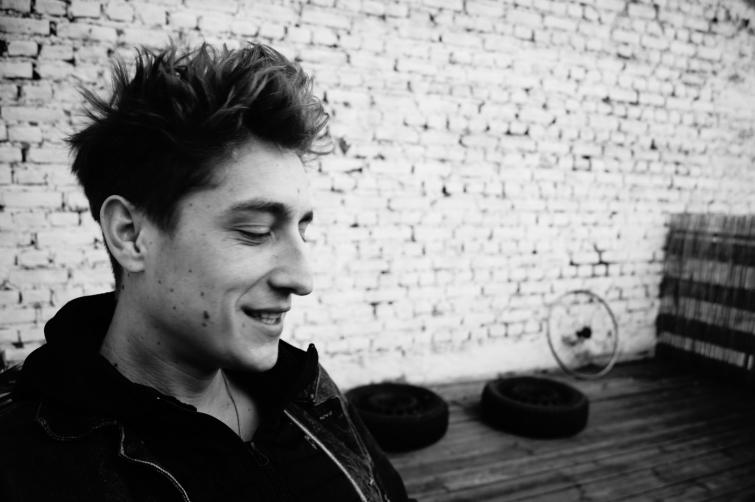
Paul Briaye
Bio
Paul Briaye is developing a cinema of the margins and the underground. Attracted by places that are difficult to access — ancient mines, abandoned houses, sewers — he explores the traces left by those who inhabited them.
His graduation film, News from up there, follows an underground exploration through which he tries to grieve his grandfather. The film was selected and awarded at several festivals, including Les Écrans Documentaires and the Faito Doc Festival in Italy.
Winner of the Ateliers Médicis, he then co-directed Oxar City, with a group of inmates, Oxar City, a film imagining a ruined city that its inhabitants are gradually rebuilding. Shot entirely from the prison's activity room, the film brings to life the imaginations of inmates using images generated by artificial intelligence.
He also directed The House in the Trees, produced by Avis Films, born from the discovery of an abandoned house in Normandy. Using objects and handwritten texts left by his deceased owner, he tries to recompose his story while his traces gradually disappear. The film is accompanied by experiments on film that give materiality to oblivion.
With Titouan Poënces, he is currently developing Le Monde à l'Envers, an immersion in the world of sewer workers in Île-de-France. Produced by 5A7 Films, the project won writing and development assistance from the CNC, the ForTE Talent Emergent grant from the Île-de-France Region and the writing grant from the Grand Est Region.
Residency project
For his residency at Rocabella, Paul Briaye embarks on a crucial phase of research and creation for his feature film project, The World Upside Down. Continuing to work on the margins and shadow narratives, he here confronts his documentary vision with the solar elegance of the Riviera. The Rocabella Estate, with its history-laden villas and Mediterranean landscapes, becomes an ideal narrative playground to explore the contrast between appearance and intimacy.
Taking advantage of the serenity of the location, Paul aims to transform Rocabella into an 'off-site' writing laboratory. His project involves capturing the estate's traces of memory—both architectural and human—to feed the imagination of his film. Drawing on his expertise as an editor and sound recordist, he plans to use the acoustics and light of the coastline to define the sensory identity of his work. This residency is also an opportunity to design lightweight participatory frameworks, involving the local ecosystem in his creative reflection. At Rocabella, Paul Briaye is not simply looking for a backdrop, but a creative partner capable of revealing how every space, even the most majestic, can tell a universal and profoundly human story.
Follow
