
Screenwriting residency
from 30 March 2026 to 24 April 2026
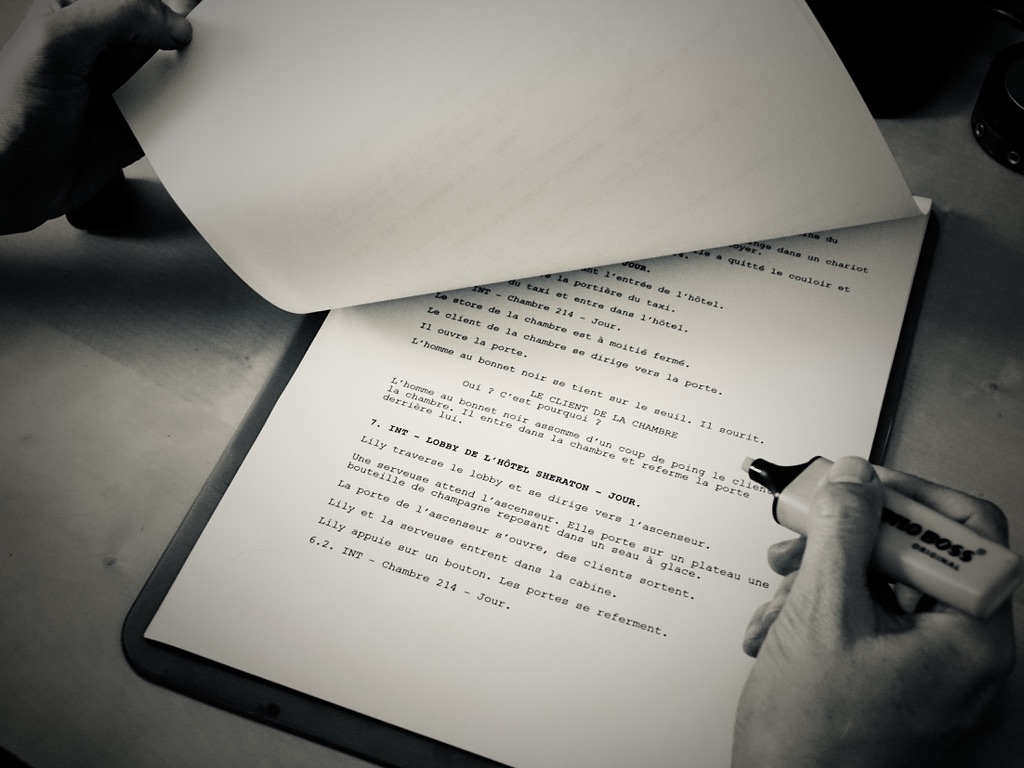
1 month of residency to write a documentary screenplay around the theme “Not all women come from Venus”.
About
“Not all women are from Venus”
GENESIS OF THE PROJECT
It all began in April 1989, when Marc Gauché, then aged 25 and heartbroken, took refuge in a movie theater to see I married an alien. What could have remained a simple emotional escape becomes the starting point for a decades-long investigation. Facing the screen, her intellectual gaze is awakened: why is Céleste, the extraterrestrial played by Kim Basinger, filmed according to all the codes of “male gaze” theorized by Laura Mulvey? Why this traditional femininity so marked when the genre of E.T. or Klaatu never seemed important?
This initial questioning led Marc Gauché to methodically identify films featuring extraterrestrial women, Voyage to the Moon from Georges Méliès in 1902 until Sci-Fi Vixens from Beyond in 2024. More than 120 years of cinema where these creatures from elsewhere — Selenites, Martians, Venusians — served as a mirror to the fantasies, fears and gendered representations of each era.
WHY ROCABELLA?
Rocabella is not just a simple place to welcome this residence. It is a space that will become an integral part of the documentary itself, through the “artistic punctuations” imagined by director Patrick Foch: “aliens are invading Rocabella” and “micro-portraits outside the walls”. This place of creation will make it possible to anchor the project in a physical and artistic reality, creating a dialogue between theoretical analysis and visual creation.
PURPOSE OF THE RESIDENCE
The aim of this residency is to transform several decades of research and thinking into a successful documentary scenario. Marc Gauchee brings his academic background in gender studies and film analysis, his ability to distinguish what belongs to the story of the film, to the narrative position and to the discourse of the authors. Patrick Foch adds his know-how as a director and his visual device.
The challenge is twofold: on the one hand, to structure a complex investigation that questions how cinema has built, through these women from elsewhere, “a hierarchical and essential vision of gender difference”. On the other hand, to create a film object that is both intellectually rigorous and accessible to the general public, capable of reaching those who, as in 1989, are looking in cinemas for answers to their questions about alterity, desire and gender relationships.
The finalized script will then serve as a support for seeking the funding necessary for the production of the documentary. It will convince producers and broadcasters of the originality of the project: to show that these representations of extraterrestrial women, far from being anecdotal, reveal our fantasies, our fears and our ambivalences in the face of female emancipation — creatures that are both submissive and free, at the same time, free, eroticized and threatening, politically incompetent but endowed with extraordinary powers.
Residents
FAQ
What is the duration of the residency?
Depending on the themes, a residency can last from one week to several months, which gives participants enough time to immerse themselves in the environment and carry out their projects successfully.
Who can participate in a residency?
The residency is open to artists and researchers aged 21 and over and of all levels of experience. Priority is given to those who wish to exchange with their peers or with other creatives from other disciplines. The selection is based on an application file, which includes a project proposal, a portfolio and a statement of interest. A panel of competent experts reviews all applications.
Are there any costs associated with the residence?
All essential expenses are covered: accommodation, full board, housekeeping, consumables, round-trip transportation, as well as access to shared tools and spaces required for collective projects. Residents remain responsible for their personal expenses and any specific costs related to their individual projects. An artistic grant is also awarded to support each residency.
Does the residency include coaching or mentoring?
Each residence is specific. Depending on the themes, participants can have access to personalized coaching and mentoring from renowned experts in their field. Storytelling and pitch training workshops are also often included in programs to help residents better value their work.
Are international applications welcomed?
We welcome applications from around the world for a portion of our residencies. The diversity of perspectives is highly valued in our program and the common language is English.
Please consult the specific residences to see which are in French and which in English.
Are-the residents alone on site ?
During the winter residency periods, Rocabella focuses on its artist-in-residence program.
What is a creative residency in La Rocabella?
Artistic residencies are periods during which artists and creators come to work on their projects around a specific theme. Residents are supervised by a specialist mentor and can benefit from advice from professional artists or specialists to enrich their creative activity.
